
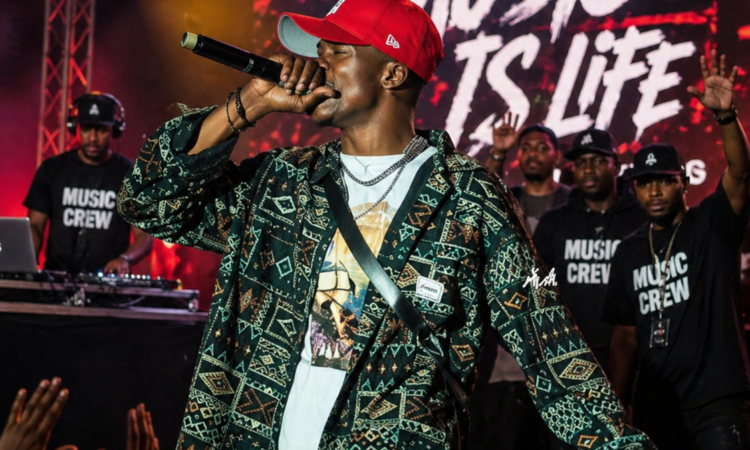
There is a kind of music that doesn’t just ask you to listen — it demands that you move. In Côte d’Ivoire, and across the vast, vibrant landscape of French-speaking West Africa, that music has long had a name: Coupé-Décalé. And for well over two decades, one of its most electrifying, enduring, and deeply human voices has been a man born Patrick Tanguy Séry Digbeu in the teeming city of Abidjan — known to the world simply as Debordo Leekunfa.
Born on February 22, 1984, in Abidjan, Ivory Coast, Debordo grew up in the rhythmic chaos of one of West Africa’s most dynamic cities. He came up in Yopougon — a sprawling, culturally electric commune on the western edge of Abidjan, known as a cradle of Ivorian popular music, street culture, and artistic fire. It was here, among the maquis bars and open-air dance floors, that a young Patrick Digbeu first fell in love with music. Not classical music, not choir practice — the pulsing, percussive, irreverent energy of the streets. WikidataMusic In Africa
In 2004, he began training himself on the turntables and soon became a DJ at a maquis in the Marcory neighborhood. It was a modest beginning — late nights, small crowds, and the slow education of learning what makes people dance. But Debordo was absorbing everything. By the early 2000s, his professional journey had taken him to perform in popular night venues such as La Cour des Grands and Le Shangaï — institutions of Abidjan nightlife where the city’s best dressed, most spirited revelers came to forget their troubles and celebrate being alive. Music In AfricaTheCityCeleb
The Spark: Kpangor and a Partnership That Shook Abidjan
Then came the collaboration that would change everything.
He soon started a dance craze with 2005’s “Kpangor,” a collaboration with DJ Arafat, following it up with a quick series of hits that expanded his fan base across West Africa. The two young men from Abidjan were an extraordinary match — raw, bold, and bursting with ideas. Their partnership produced a string of landmark tracks including Confirmation Kpangor, Lebede 1 & 2, and 25 25 Arachide, and their collaboration revolutionized Coupé-Décalé with electrifying dance routines and call-and-response performance styles. Apple MusicTheCityCeleb
By 2008, Debordo had become a household name in Côte d’Ivoire. His nickname — Tchokoroba, a title he wore with mischievous pride — captured his essence perfectly: irreverent, quick-witted, and impossible to ignore. Audiences didn’t just listen to Debordo; they watched him, imitated him, quoted him. He had become more than a musician. He was a cultural force. TheCityCeleb
Going Solo: The Birth of Opah la Nation
Every partnership, no matter how brilliant, has its fault lines. After their fallout in 2009, Debordo embarked on a solo career, producing major hits like American Soldier (2009) and Opa la Nation (Vérité) (2010), both of which solidified his reputation as an innovative force. TheCityCeleb
Tracks including 2008’s “Suis Moi” had arrived under the alias DJ Debordeau. As Debordo Leekunfa, he issued exuberant material including “American Soldier” and “Rien Que la Nation,” collecting those songs and others on the album Opah à la Nation in mid-2013. Apple Music
The name Opah la Nation became more than a song title — it became a rallying cry, a brand, a statement of identity. Debordo was telling Abidjan, telling Côte d’Ivoire, that he wasn’t going anywhere. He was the nation’s own. And the nation responded with open arms.
Throughout this era, he mixed components of hip-hop, Afro-pop, and dance music into kinetic, dance-floor-shaking hits — a blending of genres that kept his sound perpetually fresh, impossible to pin down and therefore impossible to tire of. AllMusic
Shadows and Rivals: The Feud That Defined an Era
Fame in Abidjan’s music world is never quiet. Debordo’s long-standing rivalry with DJ Arafat dominated Ivorian pop headlines from 2009 to 2018, marked by musical diss tracks and public altercations. The two men who had built their early careers together now faced each other across the divide — hurling bars, trading insults on record and in the press, keeping their fans constantly riveted. In many ways, the rivalry mirrored the competitive spirit of Coupé-Décalé itself: theatrical, passionate, deeply personal, and oddly life-giving to both men’s careers. TheCityCeleb
But life — real life, with its indifference to artistic feuds — intervened brutally.
In 2016, Debordo survived a major car accident that left him hospitalized for months and tragically claimed the lives of two of his dancers. The grief was immense and public. Rather than retreat into silence, Debordo processed his mourning through music — releasing “Hommage,” a tribute to the colleagues he had lost, a rare moment of raw vulnerability from an artist better known for his infectious energy and comedic flair. The accident marked a turning point. Something in him had shifted — deeper, more reflective, more aware of the fragility threaded through every triumphant beat. TheCityCeleb
Eventually, Debordo and DJ Arafat found their way to reconciliation, the years of rivalry giving way to a renewed mutual respect. The two men who had started together, fallen apart, and fought publicly finally made peace. For fans of Ivorian music, it felt like a restoration of something sacred. TheCityCeleb
Loss, Grief, and the Silence That Followed
Then, in August 2019, DJ Arafat was killed in a motorcycle accident in Abidjan. He was 33 years old. For Debordo, the loss was not the death of a rival — it was the death of a brother. Speaking publicly after a period of extended silence, Debordo said: “I was in denial about losing my close friend DJ Arafat. I needed to step back a little to think about myself.” www.choco.ci
He reflected further: “Arafat and I started music together. We shared a lot of things. His death, his absence, is inevitably a blow. When I look at those who are currently in Coupé-Décalé, there is no one who can challenge me the way Arafat did — who could boost my career and give me the tenacity he knew how to inspire.” www.choco.ci
It is a rare and luminous thing when an artist admits, so plainly, that their greatest rival was also their greatest motivator. In that admission, Debordo revealed more about himself than any biography could manufacture: a man of deep feeling beneath the showmanship, someone for whom music was never just entertainment, but a relationship — with genre, with audience, and with the people who pushed him to be better.
Reinvention: A Career That Refuses to Stand Still
The music, thankfully, never stopped.
His hits included the party anthem “Shake Your Body,” originally released in 2015, and he continued to attract millions of clicks into the next decade with songs like 2020’s “QDS (Que du Saal).” Throughout the 2010s and into the 2020s, Debordo experimented with new rhythms, merging Coupé-Décalé with Afrobeat and pop influences. His later works, including Spécialité Ivoirienne (2019), Massaii (2021), and Djénéba Djaba (2024), showcase lyrical maturity and social commentary. Apple MusicTheCityCeleb
Described as a versatile artist who excels in singing, songwriting, rapping, and composing Afro-pop and Coupé-Décalé music, Debordo has never been content to simply maintain. Each era of his career has brought new experimentation, new audiences, new proof that longevity in African popular music belongs to those willing to evolve. African Music Library
He has spoken openly about the imminent release of his debut album Apogée, telling fans: “There’s huge anticipation, which puts pressure on me, but as I know myself, I’ll do it clean. Be assured — Coupé-Décalé has taken a hit, but we remain optimistic.” www.choco.ci
The Man Behind the Music
Away from the stage lights, Debordo maintains a low public profile regarding his romantic and family life. He has one daughter, born in 2020, whom he occasionally mentions on social media. Despite his flamboyant on-stage persona, he has often spoken about loneliness and the pressures of fame. TheCityCeleb
It is, perhaps, the most human dimension of his story — the gap between the performer who fills dance floors with joy and the private man who has had to learn, repeatedly, to grieve, to recover, and to begin again. He has survived a near-fatal accident. He has outlasted a defining rivalry. He has mourned his closest collaborator. And through every storm, he has returned to the music — not because it is his career, but because it is, in the truest sense, who he is.
A Legacy Still Being Written
More than twenty years after a young man from Yopougon first put his hands on a set of turntables, Debordo Leekunfa remains one of the most compelling figures in West African popular music. He did not merely ride the wave of Coupé-Décalé — he helped shape it, define it, and sustain it through multiple generations of listeners. His story is not the story of overnight fame but of relentless creative hunger, of a man who kept showing up even when life gave him every reason to stay down.
As Abidjan continues to pulse with new sounds and new voices, Debordo stands as both elder statesman and restless innovator — a reminder that the most enduring artists are those who never stop asking the music one more question. With Apogée on the horizon and a new chapter still unfolding, one thing is certain: Debordo Leekunfa is far from finished. The nation, after all, is still listening.