

Burna Boy
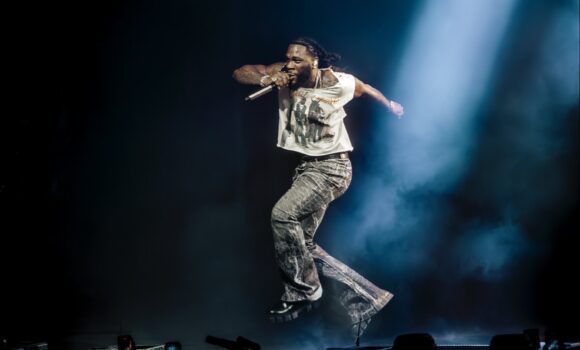
M.I Abaga
Jude “M.I” Abaga: From Jos to Hip-Hop Royalty
Introduction
The story of M.I Abaga — born Jude Lemfani Abaga — reads like a classic underdog-to-king tale. A rapper, songwriter, record-producer, music executive and entrepreneur, M.I has carved out a legacy that spans decades. From his humble beginnings in Jos to his reign at a major record label, and eventually founding his own imprint, his journey is a testament to passion, resilience and artistic vision. In this article, we explore his life, career, impact — and yes, even an up-to-date snapshot of his estimated net worth.
Early Life & Background
Birth and Family Roots
Jude Lemfani Abaga was born on 4 October 1981 in Jos, Plateau State, Nigeria. (Wikipedia) His parents — Pastor and Mrs Abaga — originally hail from Takum, in Taraba State, and are of Jukun descent. (Konya)
He grew up in a family deeply rooted in northern Nigeria’s cultural fabric. Among his siblings are Jesse Jagz and Jason Abaga — with Jesse Jagz also emerging as a notable figure in the Nigerian and African music scene. (Carlots)
Musical Seeds: Childhood & School Years
During his formative years at Baptist High School, Jos, Jude’s mother encouraged his artistic leanings: she bought him basic music notations, and later, a 7-key mini piano — instruments that triggered his first real steps into music. (Konya)
As an adolescent, Jude immersed himself in a diverse musical buffet: tracks from the likes of Lauryn Hill, Bob Marley, Jay-Z, DMX — even poets like Pablo Neruda and alternative voices such as Sarah McLachlan. This rich cross-genre exposure heavily influenced his artistic sensibilities. (Konya)
College Days Abroad: Michigan & Poetry-Stage
Jude’s journey took him abroad to study Business and Economics at Calvin College in Michigan, USA. (Konya) There, he gravitated toward poetry and performance — showcasing his lyrical prowess at campus hip-hop shows. In 2003, he secured a third-place finish at the college’s “HipHopera” show — the only hip-hop event the college reportedly ever held. That early stage-exposure foreshadowed a career in rap. (Konya)
He also tried his hand at comedic performance — but after a poorly received show (his jokes fell flat), he decided to focus solely on music. (Konya)
The Return to Nigeria & Early Career (2003–2007)
Upon returning to Nigeria in 2003, Jude entered a music industry dominated by veteran rappers such as Modenine, Ruggedman and Eedris Abdulkareem. Undeterred, he began crafting mixtapes alongside his friend Djinee. (Konya)
This early hustle led to the creation of tracks that merged satire, social commentary and catchy beats. His early single — originally a mixtape output — displayed his lyrical dexterity and willingness to experiment. Though the song “Safe” is often credited as his big first break, the groundwork had been laid long before. (Konya)
In 2006, M.I dropped a song titled Crowd Mentality, which resonated deeply within his hometown Jos — marking the first time he gained widespread local recognition. This track is often cited as the spark that ignited his rise. (Wikipedia)
Breaking Out: Rise to Popularity (2008–2010)
Debut Album: “Talk About It” (2008)
On 11 December 2008, M.I released his debut studio album, Talk About It. The album showcased his lyrical depth, blending everyday realities with thoughtful reflections — a style rarely seen in mainstream Nigerian rap at the time. (Konya)
The reception was overwhelmingly positive. Critics praised M.I’s technical flow, clever wordplay, and the fresh sound he brought to the Nigerian hip-hop scene. The album set the stage for what was to come — signaling that a new voice had arrived, one that demanded attention. (Kashgain)
Early Success & Recognition
With “Talk About It” out, M.I began building momentum. Industry insiders and fans recognized him as a promising force. By 2009, he’d earned the awards for Best Hip Hop and Best New Act at the MTV Africa Music Awards. (Wikipedia)
In 2010, he received a nomination in the Best International Act category at the BET Awards — a clear indicator that his talent was gaining continental and global attention. (Wikipedia)
In the same period, M.I dropped his second studio album, MI 2: The Movie (2010), consolidating his position as a leading voice in Nigerian hip-hop. (Wikipedia)
Building the Empire: Leadership & Influence (2010–2019)
Founding & Signing: From Loopy Music to Chocolate City
Before the big label days, M.I had co-founded Loopy Music along with his brother Jesse Jagz and other emerging talents. (Konya)
Eventually, M.I joined Chocolate City — one of Nigeria’s foremost record labels — which marked a turning point. Relocating from Jos to Abuja, he quickly became central to the label’s vision and execution. (Wikipedia)
Third Studio Album: “The Chairman” (2014)
Continuing his upward trajectory, M.I released The Chairman in 2014. The album reflected his growth — musically and thematically. It combined slick production, matured lyrical themes, and showcased the confidence of an artist who had “arrived.” (Wikipedia)
CEO of Chocolate City (2015–2019)
In June 2015, M.I was appointed CEO of Chocolate City — a major milestone not just for him but for the Nigerian music industry at large. (Wikipedia)
During his tenure, he nurtured and mentored younger talents, oversaw projects and spearheaded growth of the label’s roster. That period arguably exposed a new generation of artists to rap, while cementing M.I’s role not just as an artist — but as a key industry executive and influencer. (Kashgain)
Artistic Evolution: Later Albums & Projects (2018–2022)
“Rendezvous” Playlist (Feb 2018)
On 9 February 2018, M.I released a fresh playlist titled Rendezvous. The project came as a surprise to fans — a stylistic detour from his usual releases, showing his willingness to experiment with form and tone. (Konya)
The release arrived just a day after he announced the release date for his next studio album — signaling a prolific and creative period in his career. (Konya)
“A Study On Self Worth: Yxng Dxnzl” (Aug 2018)
Later that year (24 August 2018), M.I dropped his fourth studio album, A Study On Self Worth: Yxng Dxnzl — often referred to as “Yxng Dxnzl.” The album explored deep themes like self-worth, mental health, self-doubt, and the social pressures faced by young people in modern Africa. (Wikipedia)
Through this project, M.I affirmed himself not just as a rap star, but as a thoughtful artist unafraid to address serious issues.
Recent Work: “The Guy” (2022) and Beyond
According to recent sources, M.I Abaga has continued to evolve, releasing material even in 2022. (People AI) His longevity in a constantly shifting industry speaks to his adaptability — an artist who evolves while staying true to his core.
Entrepreneurship & New Beginnings: Launching Incredible Music
On 6 March 2020, M.I announced his departure from Chocolate City and unveiled his new record label, Incredible Music. This move marked a new chapter: shifting from being a label executive to running his own imprint — an entrepreneurial leap that signals both confidence and ambition. (Wikipedia)
Incredible Music became a platform for M.I to nurture new talents and maintain creative control — an essential step for an artist with vision and legacy in mind.
Estimated Net Worth (2024 / 2025)
Estimating net worth for public figures — especially in music — is never an exact science. Nonetheless, multiple reputable sources converge around a similar ballpark for M.I Abaga’s wealth as of recent years:
- A 2024 estimate puts his net worth between US$5 million and US$8 million. (Kashgain)
- Another 2025 source places his net worth at about US$8 million. (Glusea.com)
- Some older estimates suggest a conservative figure around US$3.9 – US$4 million, but given his continued output, executive earnings, endorsements, and business ventures — the higher estimates seem more plausible. (Viberate)
Taking these into consideration, a reasonable estimate for 2025 would be in the range of US$7–9 million.
His income likely comes from multiple streams: music sales/royalties (albums, singles, streaming), live performances, his role as a record-label executive, brand endorsements, and investments/business ventures tied to his industry experience.
Why M.I Abaga Matters: Influence on Nigerian & African Hip-Hop
Pioneer of a New Sound
When M.I first emerged, Nigerian hip-hop was still developing its identity. With his diverse musical influences (from Bob Marley to Lauryn Hill to DMX) and polished lyrical style, he helped shape a more mature, thoughtful rap aesthetic in Nigeria.
Mentor, Executive, Culture Shaper
Beyond his own music, M.I’s leadership at Chocolate City — and later his founding of Incredible Music — helped foster younger generations of artists. Through mentorship, production, and executive direction, he played a central role in expanding the Nigerian hip-hop ecosystem.
Bridging Regional & Cultural Gaps
Hailing from Northern Nigeria (Taraba/Jos heritage), M.I brought a unique regional flavor into mainstream Nigerian music. In doing so, he contributed to a more inclusive sound — one that resonated across ethnic and regional divides.
Addressing Real Issues
Albums like “Yxng Dxnzl” showed his willingness to tackle serious topics — mental health, identity, self-worth — giving his music substance beyond entertainment. Such depth helped push African hip-hop toward more reflective, socially aware spaces.
Challenges, Rivalries & Criticisms
Like many successful artists, M.I’s path wasn’t without friction. Over time, he became embroiled in rivalries with other artists, and there were critics who questioned certain ideological stances — especially around competition in hip-hop culture. While those disputes sometimes made headlines, M.I generally opted for growth and focus over prolonged feuds. (Konya)
Moreover — as with many artists in Nigeria — inconsistent industry infrastructure, piracy, and changing audience tastes posed challenges. Yet, M.I’s adaptability and versatility helped him weather many of these storms.
Legacy: M.I Abaga’s Enduring Impact
- M.I helped legitimize rap as a serious musical form in Nigeria — merging lyrical depth with commercial sensibility.
- As label executive and founder, he opened doors for many emerging stars, affecting a new generation of artists.
- His albums, especially “Talk About It”, “The Chairman” and “Yxng Dxnzl,” remain influential — widely regarded as classics in Nigerian hip-hop.
- By bridging regional and cultural identities, he broadened the reach of Nigerian rap — making it more inclusive.
- His entrepreneurial shift with Incredible Music underscores the idea that successful artistry can coexist with business acumen.
Conclusion
M.I Abaga’s journey — from a young music-loving boy in Jos to a rap legend and industry magnate — is nothing short of inspiring. He didn’t just ride a wave; he helped build the ocean. Through talent, perseverance, and vision, he transformed African hip-hop, giving voice to a generation and laying the foundation for many who followed.
Today, with an estimated net worth in the range of US$7–9 million, M.I stands as a testament that talent, hard work, and smart decisions can turn dreams into lasting legacy. Whether as an artist, executive, mentor or entrepreneur — his imprint on Nigerian music is indelible.
{finish}
FAQs (Frequently Asked Questions)
1. What is M.I Abaga’s real name?
His real name is Jude Lemfani Abaga.
2. When and where was M.I Abaga born?
He was born on 4 October 1981 in Jos, Plateau State, Nigeria.
3. What are M.I Abaga’s most famous albums?
His most acclaimed albums include Talk About It (2008), MI 2: The Movie (2010), The Chairman (2014), and A Study On Self Worth: Yxng Dxnzl (2018).
4. What is M.I Abaga’s estimated net worth as of 2025?
Based on multiple sources, his net worth is reasonably estimated at US$7–9 million as of 2025.
5. What is the name of M.I Abaga’s record label today?
He currently runs his own label called Incredible Music, which he launched in 2020 after departing from Chocolate City.