
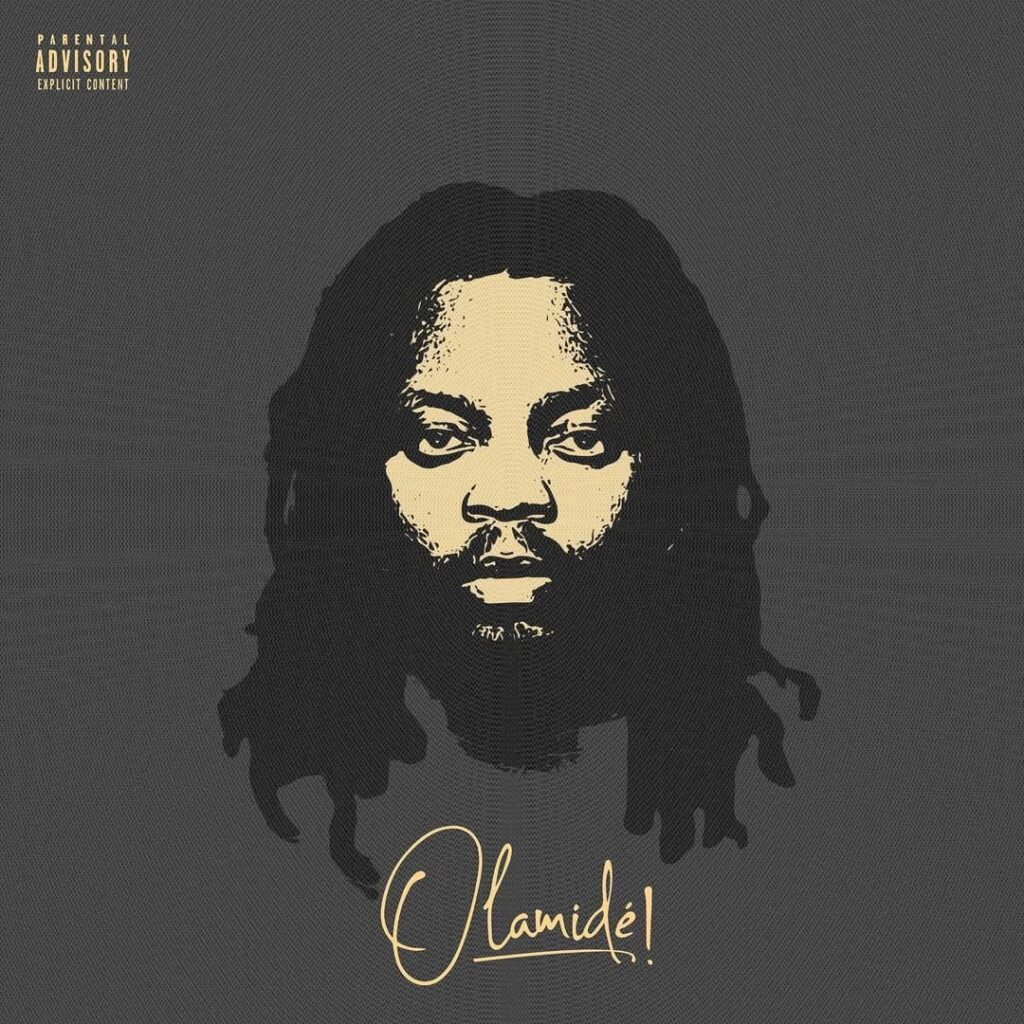
Olamide – Olamidé
Olamide’s Legacy and His Self-Titled Album: A Deep Dive Into a Career That Needs No Validation
When we talk about African music royalties—artists whose legacies are so deeply carved into the continent’s sonic landscape that no debate can shake it—Olamide sits comfortably at the top. And honestly? As far as legacies go, the man has absolutely nothing left to prove. He has done it all. Classic albums? Checked off a decade ago. Career peaks that positioned him as the biggest artiste in Nigeria? Multiple times. A platform that has launched some of today’s brightest stars? That’s practically his signature move.
Yet here we are again, welcoming his eleventh studio album, a work that isn’t trying to reinvent anything but still manages to achieve exactly what it sets out to do—and does it beautifully.
In this article, we unpack Olamide’s unmatched legacy, the artistic evolution that led to this moment, and a detailed breakdown of the new album that effortlessly marries calmness, jazz influences, spiritual undertones and Afrobeats finesse.
1. Introduction: Why Olamide’s Legacy Is Set in Stone
Let’s get this out of the way: Olamide doesn’t need global awards, international cosigns or Western validation to cement his greatness. The numbers already speak loudly for him. He is still the most streamed African rapper on Spotify—without chasing trends or forcing global collaborations.
He is from a pre-streaming era yet still dominates in the streaming era.
That alone tells us we’re dealing with a historical figure, not just another artiste.
2. A Decade of Greatness: His Record-Smashing Discography
Fourteen years.
Ten studio albums.
Two EPs.
Two collaborative albums.
Very few artists alive—African or otherwise—have produced this much quality music consistently without losing cultural relevance. From Baddest Guy Ever Liveth to Carpe Diem, Olamide has effortlessly reinvented himself while staying rooted in street music, Yoruba lyricism, and heartfelt storytelling.
3. The Myth of “International Recognition” and Why It Doesn’t Matter
Some critics argue that Olamide doesn’t have enough global influence. But what they forget is this:
He launched artists who achieved the global feats he never pursued.
Asake.
Fireboy.
Adekunle Gold.
Producers like P.Prime and Young Jonn.
His fingerprints are everywhere.
His impact is generational.
When an artiste intentionally refuses the “global chase” yet remains a ruler at home, it’s not a shortcoming—it’s a power flex.
4. A New Album, A New Chapter—But Same Confidence
His self-titled 11th studio album doesn’t aim to transform his sound the way Carpe Diem or Ikigai did. Instead, it feels like a refined continuation—a body of work crafted with the calm confidence of someone who has nothing left to prove.
Olamide wanted to make laid-back, jazz-laced music that feels like a night in a sophisticated bar.
And he did exactly that.
5. Post-2020 Olamide: The Era of Curated Brilliance
This era has given us the most cohesive Olamide projects to date.
Albums with no fillers.
Albums structured like well-edited films.
Albums where even the transitions feel intentional.
Not to mention—he has been A&R-ing some of the best albums across Afrobeats.
The man is in a curatorial phase—and he’s mastering it.
6. Setting the Mood: Prelude and the Jazz-Club Aesthetic
Prelude is a gentle piano ballad that immediately sets the tone.
No hype.
No drums.
Just calm ambience that pulls you into Olamide’s chosen mood for the album.
It’s the kind of intro that whispers:
“Relax. This album isn’t for noise. It’s for feeling.”
7. Spiritual Foundations: Hasibunallah and Its Universal Message
This track is rooted in faith, gratitude, and prayer—elements that have always shaped Olamide’s music. While the Arabic-influenced chorus reflects his Muslim upbringing, the message itself is universal.
It’s mid-tempo, warm, and comforting—an early emotional anchor for the album.
8. Luxury Jazz Meets Afrobeats: Kai and the Wizkid Chemistry
Jazz horns.
Triumphant sax riffs.
Smooth rhythms.
Then Wizkid enters—effortless as always.
This is a luxury track.
A “slow-sip whiskey” type of record.
The blend of Olamide’s melodic rap and Wizkid’s silky delivery feels natural, elegant, and mature.
9. Romance and Resonance: Luvaluvah and Its Sampled Brilliance
Sampling Lauryn Hill’s Can’t Take My Eyes Off You, the song blends nostalgia with modern African rhythm.
The rumbling bassline creates tension while Olamide sings about love that feels vulnerable and hopeful.
A simple, beautiful romantic moment.
10. Philosophy in Motion: Billionaires Club and Its Dancehall Twist
Produced by Prime—who also crafted Asake’s MMS—this track follows that same thoughtful-spiritual template but adds a dancehall twist.
The writing is loose and spontaneous, covering:
- street wisdom
- pleasure
- lifestyle musings
Darkoo steals the show with an excellent verse, giving the track a sharp edge.
11. Free: The Emotional Core of the Album
This is arguably the best song on the project.
Muyeez delivers a jaw-dropping chorus—soft, emotional, raw.
Seyi Vibez comes in, keeps it simple but heartfelt.
Olamide brings a short rap verse filled with vulnerability.
This track captures the emotional weight of leaving home, chasing dreams, and paying the price for ambition.
It’s the soul of the album.
12. Amapiano Reimagined: Duro and the Local Percussion Magic
This isn’t your standard South African Amapiano.
Olamide swaps out log-drum-heavy formulas for more traditional African percussions—resulting in a familiar yet fresh sound.
He sings about impatience in love, frustration, longing—everyday emotions wrapped in a groovy beat.
13. The Piano, the Sax & Dr. Dre: Indika’s Legacy Talk
Sophisticated jazz horns return here with full force.
Dr. Dre opens the track with reflective bars, and Olamide follows with verses about:
- legacy
- influence
- the joy of success
- living life with intention
Their relaxed style fits perfectly into the album’s laid-back aesthetic.
14. Collaboration Excellence: 99, Seyi Vibez, Asake & Daecolm
Olamide takes a backseat here—letting others shine.
Seyi Vibez delivers one of his best melodic performances.
Asake takes a soft, mellow approach.
Daecolm brings international smoothness.
This is a celebratory track—“party like 99”—and gives the album a social atmosphere.
15. The Beauty of Afro-R&B: Ruba’s Emotional Clarity
Soft guitar strings.
Warm melodies.
Honest writing.
Olamide sings with emotional precision, showing vulnerability without trying to outperform vocalists who specialize in R&B.
This one is built to age gracefully.
16. Experimentation or Misstep? Rain, Paris, Hybrid & Lalakipo
Not every experiment lands perfectly.
Rain (ft. Popcaan)
– Nostalgic reggae.
– Some will love it, others may find it outdated.
Paris (ft. Fadi)
– Beautiful but feels more like a transition piece than a full song.
Hybrid
– The late-arriving “banger.”
– Traditional percussion + talking drums + log drums = groove heaven.
Lalakipo
– Arguably the album’s weakest link.
– Feels like a filler track.
17. Purposeful Softness: Why This Album Isn’t Trying to Impress
This album is quiet on purpose.
It is calm on purpose.
It is laid-back on purpose.
Olamide knows his strengths. He also knows his legacy is complete. This project isn’t designed to compete—it’s designed to soothe, reflect, and celebrate life.
It may not be as ambitious as his earlier works—but it succeeds in exactly what it intended to be.
18. Conclusion: Olamide’s Legacy—Loud Even When He Goes Quiet
Even when he relaxes, Olamide remains a giant.
He has given the world:
- timeless albums
- a generation of superstars
- the most consistent rap catalogue in Africa
- cultural influence spanning 14 years
This album might be mellow, but it reinforces one truth:
Olamide doesn’t need to prove anything.
He built the mountain—others are simply climbing it.